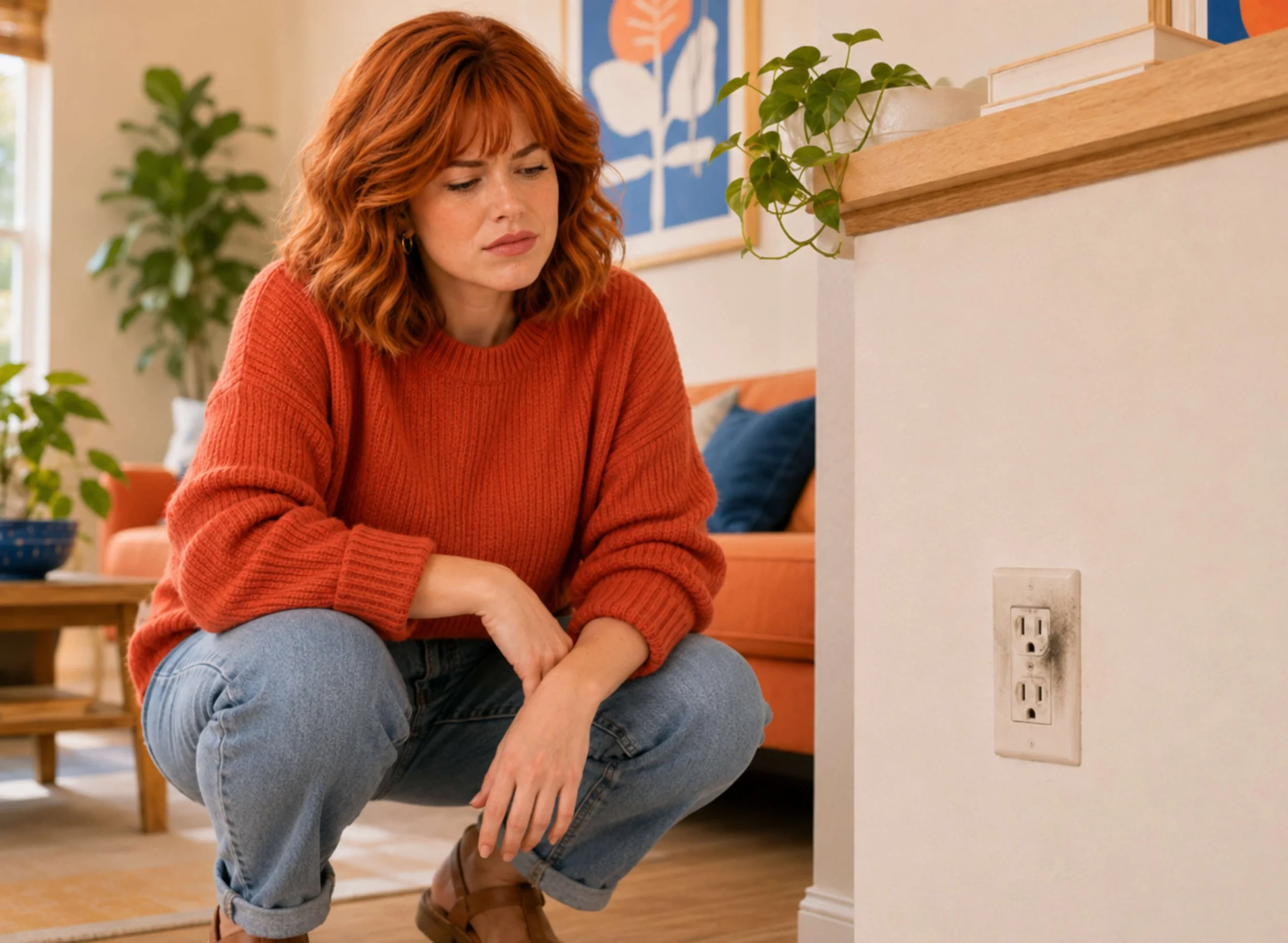
An electrical problem is urgent when there is an active risk of fire, serious shock, or additional damage. Flames, smoke, sustained sparking, a strong burning smell, unusual heat, exposed live wiring, or a person receiving an electrical shock all call for immediate caution.
Other problems, such as one dead outlet with no heat or odor, one fixture that stopped working, or a planned electrical upgrade, can usually be handled through a normal service appointment.
You do not need to diagnose the cause. Start with what you can see, smell, hear, and safely avoid.
WHEN TO LEAVE THE AREA AND CALL 911
Call 911 when there is:
Visible fire or flames
Smoke coming from an outlet, switch, panel, fixture, appliance connection, or wall
Sustained or violent sparking
An electrical fire that appears to have stopped but may still be active inside a wall
A person who has received a serious electrical shock, is injured, is unresponsive, or remains in contact with an electrical source
A downed power line or damaged electrical service creating an immediate public danger
Do not use water on an electrical fire. Leave the area, keep other people and pets away, and follow the emergency dispatcher’s instructions.
WHEN TO STOP USING IT AND REQUEST HELP PROMPTLY
Some electrical problems may not require 911, but they should not continue being used while you wait to see what happens.
Request electrical service promptly for:
A burning, melting, or unusual chemical smell
An outlet, switch, cord connection, or panel that is unusually hot
Buzzing, sizzling, crackling, or popping
Scorch marks or discoloration
A shock or tingling sensation from an appliance, switch, or outlet
Exposed, damaged, or chewed wiring
An outlet or fixture that was exposed to water
A breaker that immediately trips again
Repeated breaker trips with no clear overload
Flickering that affects several rooms
Power repeatedly cutting in and out
Visible damage around the meter, service cable, or panel
ESFI identifies flickering lights, frequent breaker trips, warm or discolored outlets, buzzing, burning odors, and shocks or tingles as warning signs of an overload or wiring problem that should be inspected. (ESFI)
If you can stop using the affected appliance or area without approaching anything hot, smoking, sparking, wet, or visibly damaged, do so. Do not repeatedly test the problem or keep resetting the breaker.
WHAT CAN USUALLY WAIT FOR A SCHEDULED VISIT
A scheduled appointment is generally appropriate for:
One dead outlet with no smell, heat, buzzing, or visible damage
One light fixture that no longer works after the bulb has been replaced
A loose outlet or switch cover with no exposed wiring
A breaker that tripped once from a clear overload, reset normally, and has not tripped again
A ceiling fan, dimmer, or switch that is not working properly but has no safety warning signs
Planned additions, inspections, or upgrades
A question about panel capacity
An outlet, switch, or light that has been unreliable but is not showing signs of heat or damage
“Scheduled” does not mean “ignore it forever.” It means the problem can usually be described in a normal service request instead of treated as an active emergency.
If the condition changes or you notice heat, odor, buzzing, smoke, or sparking, stop using it and update the service request.
WHAT ABOUT A WHOLE-HOUSE POWER OUTAGE?
If the entire house loses power, check whether neighboring homes and streetlights are also out. A widespread outage is usually handled by the electric utility.
Keep away from downed lines, damaged meter equipment, hanging service cables, or anything touching an electrical line. Report those conditions to the utility and call 911 when they create an immediate danger.
If neighboring homes have power but yours does not—or the home repeatedly loses and regains power—the problem may involve the home’s main panel, meter connection, or electrical service. Contact the utility or an electrician based on where the problem appears to be.
WHAT TO TELL THE ELECTRICIAN
Useful details include:
What you can see, smell, or hear
The room or area affected
Whether the whole house or one circuit is involved
What was running when the problem began
Whether the problem is constant or comes and goes
Whether a breaker tripped
Whether there has been recent storm activity, water exposure, renovation work, or appliance installation
Whether the situation is getting worse
Do not touch damaged components or remove covers to gather more information.
WHAT AN ELECTRICIAN WILL HELP DETERMINE
An electrician can determine whether the problem comes from:
One appliance or device
An overloaded circuit
A worn outlet, switch, or breaker
A loose or damaged connection
Water or physical damage
The electrical panel
The service supplying the home
A problem outside the home that belongs with the utility
They can also explain whether the issue needs an immediate repair, a scheduled correction, or simply a change in how the circuit is being used.
FREQUENTLY ASKED QUESTIONS
-
Not usually by itself. A breaker that trips once from a clear overload and resets normally can often be handled without emergency service. Leave it off and request help promptly if it trips immediately again, keeps happening, or comes with heat, odor, buzzing, smoke, or visible damage. CPSC recommends investigating repeated trips instead of continuing to reset the breaker. (U.S. Consumer Product Safety Commission)
-
Stop using the outlet and keep away from it. If there is smoke, fire, or active sparking, leave the area and call 911. Without those active signs, request electrical service promptly and do not keep plugging things in to test it.
-
A single dead outlet with no heat, smell, buzzing, discoloration, or visible damage can usually wait for scheduled service. If the outlet is warm, smells burnt, has been exposed to water, or is part of a larger power problem, stop using the area and request help promptly.
-
-
No. If it trips again after one reset, leave it off. Repeated resetting does not solve the cause and may keep reenergizing a circuit with an overload, malfunctioning appliance, or wiring problem. (U.S. Consumer Product Safety Commission)
-
Right Now Electric does not offer guaranteed 24/7 coverage. Send us the details, and we’ll let you know what availability we have and what the safest next step is. For fire, smoke, sustained sparking, downed power lines, or a serious electrical injury, call 911 first.
RELATED SERVICES
Electrical Troubleshooting & Repairs →
RELATED RESOURCE
Why Does My Breaker Keep Tripping? →
Why Are My Lights Flickering? →
SOURCES REVIEWED
U.S. Consumer Product Safety Commission
Electrical Safety Foundation International
National Fire Protection Association (U.S. Consumer Product Safety Commission)